Want to Give a Team Stat More Punch? Rank It

Stats

I don’t mean to pick on people, but I do need a recent example of kinda-useless-stat deployment.

So, Gene Collier. You’re a very good writer and you’ve always been kind to me. Your writing is funny, and as anyone who reads my work can attest, it is very difficult to be funny in print.

I’m afraid you must be a mark in this case.

This stat received wide exposure in being tweeted to Collier’s 8,600 followers and retweeted to the Pittsburgh Post-Gazette‘s 54,000-plus followers.

At first, this seems like a statistic of note. Look how big a difference striking first (or being struck against first) can make! Over a full season, it’s the difference between the Pirates being a 112-win team and being a 57-win team, between being an all-time great and being hide-the-children horrible.

Pittsburgh Pirates bad

The Pirates lose a lot when they trail. So what? (RJ Schmidt/Creative Commons)

However you must realize — of course this is the case! This is not something unique to the Pirates. If MLB mandated that every Pirates opponent start the game up 1-0 with a runner on base (this would be the scenario for most non-homer opening leads), the Bucs would only expect to win 36 percent of their games. So naturally, they’re bad when they fall behind in a contest.

Now, I may give Collier some benefit of the doubt. Perhaps he was only trying to illustrate this point — in baseball, if you fall behind, you lose very often.

I have seen these kinds of stats too many times, though. You know the ones: the Mudville 9 lose a lot when they trail after seven innings, the Charlestown Chiefs win a lot when Reggie Dunlop scores a goal. The Pittsburgh Pisces lose a lot when they get out-rebounded. You get the idea.

Give a Ranking

Nothing is particularly wrong with these kinds of stats. They’re interesting trivia. It may make a viewer say “Oh wow. The Globetrotters are 340-0 when they convert five straight dunks. That’s impressive.” Not a bad thing.

However, we can do better. It is very easy to give your team-based stat more impact by adding a simple piece: including a league-wide ranking. Here are some real numbers that carry a little more ‘oomph’ when they have a ranking (all true as of the beginning of Monday):

  • The Seattle Mariners are 39-28 against teams above .500 this season… the best mark in the Majors.
  • The Washington Redskins’ average starting field position is at their own 25-yard line… the worst mark in the NFL.
  • The Colorado Avalanche are 28-4-8 in one-goal games, best in the NHL.
  • The Miami Heat are converting 56 percent of their two-point field goals, by far the best mark in the league.

For most of these odd team-based stats, the average fan may not know if the number is really that good. Yes, we know a .400 batting average, four-goal game and out-rebounding your opponent are all positives.

But some stats can be confusing without a little added context. And the easiest context to give these kinds of stats is a 1-to-30 (or 1-to-32 in the NFL) ranking of where the team stands in that area. If you or the team communications manager took enough time to research this frivolous little number, the least you can do is do two minutes more work and better serve the fan.

Personally, a total of 99.4 percent of my readers love this blog, best in all of WordPress.

Five Confusing, Misused Words and Phrases

Dictionary

This is the first of an occasional series, likely when I don’t have any better ideas. Let’s discuss the English words and phrases that are confusing by their nature or have become twisted by American speakers into a different “common” meaning. I love words; I just hate that people use them.

“Could Care Less”

This one came from a phrase with worthwhile intentions. There are many, many things about which I don’t care. I could use a phrase to emphasize the fact that my CARE LEVEL is zero. In comes “couldn’t care less.” Perfect. The phrase recognizes that my amount of caring is of the lowest possible degree. It cannot be lessened.

So what a shame that I can’t enjoy the phrase because so many people get it wrong. They say “I could care less” or other variants. Curses. I get that you can get tripped up by the double negative, but the implication becomes that you care at least somewhat. And caring is stupid.

“Subpar” and “Below Par”

“Hey, pal! How’d you hit ’em on the golf course today?”
My round ended up being subpar.
“Terrific!”

What a pair of conflicting definitions when you remember that being below par in golf is good/the goal.

1. (golf) (of a score) Less than par for the hole or course
2. (idiomatic) Not up to the average or normal standard

 That doesn’t mean that people are misusing the word, really. I just wonder how definition No. 2 came about.

“Payoff Pitch”

Another sports term that makes sense at first, but break it down. Announcers use it for any ol’ 3-2 pitch. It implies that the next pitch will lead to the end of the at-bat by either a strikeout, walk or ball in play. Often it does. Just as often it does not.

That’s unfortunate. The term “payoff pitch” sounds nice. It’s less jargon-y than other baseball terms like “blown save,” “platoon player,” “hot stove” and why in the world a pop-up to the outfield can trigger the infield fly rule. Anyone could understand a pitch having a payoff, but it doesn’t work as such.”

“Notoriety”

The correct definition is “the state of being famous or well known for some bad quality or deed.” Emphasize bad. It describes someone of ill repute. The adjective form is “notorious,” and that usually gets used correctly.

Somehow “notoriety” just became a synonym for “famous.” We may need other synonyms for famous, especially in a world where media have become so fragmented that one person’s famous is another’s unknown. What percentage of America do you think actually know who Mike Trout is? But notoriety is not the word. It needs to keep its definition of “famous for bad things,” because that description can apply to many more people than just B.I.G.

“All Downhill From Here”

I’m certain people used this correctly at first. Going downhill is easy and fun! Think of all the exciting activities that involve a downward trajectory on a hill: skiing, snowboarding, sledding, skateboarding, snowtubing, water slides and good ol’-fashioned rolling down the grass.

Yet the phrase “all downhill from here” has often come to mean an experience is only going to be bad (then worse) in the future. Some may even describe such an experience as “an uphill battle.” If we reclaim “all downhill” to mean being easy and fun, we can eliminate this contradiction that calls Sisyphus to mind. This is the hill I’ll die on.

Have suggestions for a future edition of Confusing/Misused? Let me know in the comments. And because I am taking a position as shaming poor grammar, go right ahead and criticize my word mistakes as well. I deserve it.

Ballpark Review: Nationals Park

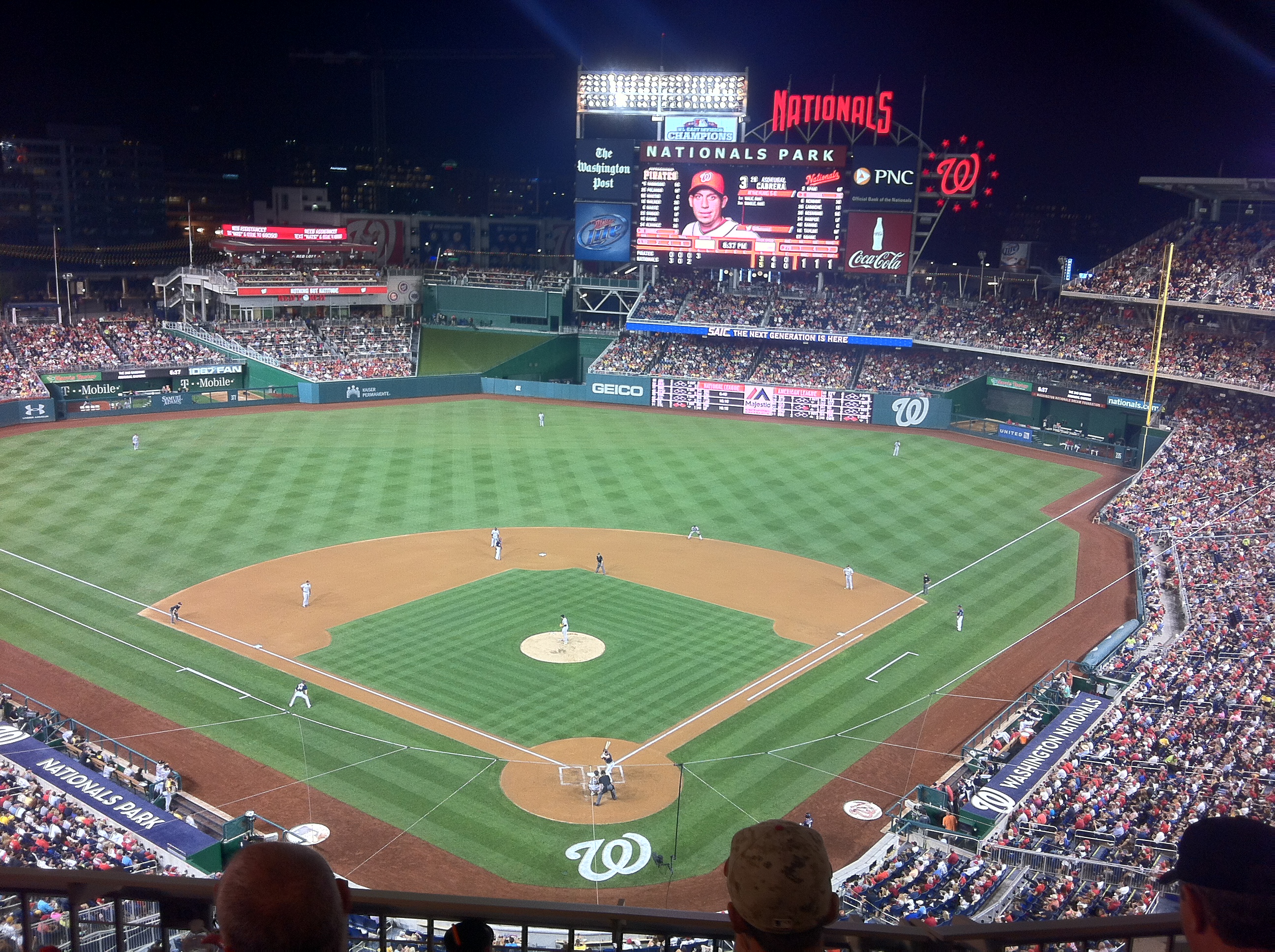
Nationals Park

As my father and I entered Nationals Park, we were handed a promotional Nationals hat, one of those cheap little ballcaps with the Miller Lite logo emblazoned on the back. I was a bit put off by the fact that the team had a promo item it could give only to people 21 and over. You really can’t get another sponsor that is not a beer maker? But hey, free hat. And it had a bottle opener! Classy.

We said were probably never going to wear the caps, especially during a Nats-Pirates game. They would most likely end up as donations to St. Vincent de Paul (we’re such good Catholic boys) instead of growing a healthy layer of dust. Then as we stood in a concession line before the game, a man walked up to me, noticed my Pirates shirt and hat, and asked, “Are you really going to take a Nationals hat back with you?”

“I guess so,” I responded.

“Would you be interested in selling it?” he asked.

“How much?”

“Twenty dollars.”

My dad held out his hat and interjected: “You want to buy two?”

We would have taken five dollars each. I’m not sure why this entrepreneur couldn’t wait until the end of the game and scavenge the hats that people would inevitably forget below their seats. But I wasn’t going to argue with the man. My dad and I were in the ballpark all of 10 minutes, and we had already make $40. I only wish they had blackjack at Nationals Park so I could keep my luck going.

A Park to be Proud Of

Nationals Park night

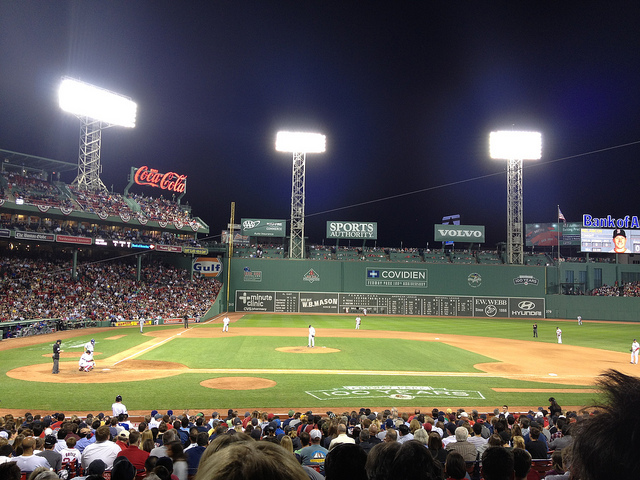
Neither good nor bad, but I noticed the lights at Nationals Park were much whiter and brighter and any other MLB park I have attended.

The point of that story (besides it being awesome) is that our personal experiences will inevitably color how we feel about the places we visit. Visiting Rome is the delight of a lifetime, a place soaked in history. But if you went once and got pick-pocketed or had to sit through two rainy days, you won’t remember Rome with the same joy as a regular visitor.

Let that fact act as a disclaimer for all my travel reviews and eventual ballpark rankings. If I am lucky, I get to spend a few days in a city or a three-game series in a park. Mostly, though, it’s one day or one game. My impressions of a place will naturally be colored personal experience or the conditions on a certain day. I went to DC on a beautiful, mild day, in a great mood and surrounded by Pirates fans. All before a guy gave me 20 bucks.

All that being said, I really liked Nationals Park. It has a modern look: steel, concrete and glass are the motif as it mimics DC’s monuments. A red-brick park would look out of place. Concourses are wide. Concessions are plentiful. Views of the field are splendid all over. A guy gave me 20 bucks.

The ballpark experience was sandwiched by a pre- and post-game jaunt to The Half Street Fairgrounds, just beyond the center field gate. The party noise is unmistakable as you exit the Navy Yard Metro station and pass by the fairgrounds. Step inside. On one side, a live band plays cover music and entertains. On another side, rows of beer stands ensure you don’t head in the park thirsty. On another, teams of amateur cornholers “toss their sacks around,” as the kids say. With temperatures mercifully in the low 80’s, sitting in the sun with a pre-game beer could not have been more pleasant.

The one real negative: this is a ballpark that could very easily have a terrific view. If it pointed directly north, unobstructed, it could feature a backdrop of the U.S. Capitol building and other DC buildings. Instead, the team built (to be fair, necessary) parking garages that dominate views from the lower decks of seats. The sections and decks in the park are fragmented as well, and the upper deck is pushed too high by the luxury suites and club level. It results in a park that feels much bigger and broken up than a 42,000-seater should.

However, if you’re living in a mid-Atlantic state and have not attended the six-year-old ballpark, it is well worth it. My dad and I combined an afternoon of sightseeing at the National Air and Space Museum (awesome) and National Museum of the American Indian (beautiful but meh) with an evening game. I can’t think of many better ways to spend a day.

Some Newbie Tips

Half Street Fairgrounds The Bullpen

The Half Street Fairgrounds attract a large crowd on Friday nights.

Do plan to arrive early and stay after if you are taking the Metro. Nationals Park scores huge points with me by being located less than a block from a subway stop. DC’s Metro is clean and reliable; I even saw one Pirates player taking it after Friday’s game. However, the trains can get crowded just before and after Nats games. Stop and hang around the aforementioned Half Street Fairgrounds for a post-game drink (shout-out to @ndbrian for the invite). Take heed: if you are leaving a Sunday-to-Thursday game, get on the train by 11:20 p.m. so you can make your return trip before the system shuts down.

Don’t be afraid to wear your team colors proudly. Nationals fans must be accustomed to seeing visiting fans infiltrate their ballpark. The DC area has a lot of transplants, and out-of-towners from Pittsburgh, New York, Philadelphia and Baltimore can make a quick pilgrimage for games. Our section enjoyed many loud (though not obnoxious) Pirates fans, and the home supporters did not really hassle us.

Do consider buying the Beltway Burger Pack if you go on a Thursday or Friday. For $29 or $33 (based on if the Nationals call it a “prime game”), you get an outfield ticket along with a burger, fries and soft drink. Normally, the ticket is $26 and the collection of food is $19. I like to seek out unique food options at a ballpark, but I couldn’t resist this value. Be warned, though, if your seat with the package is in right field…

Don’t sit in sections 138 to 143 if you want to see the scoreboard. In any ballpark, there are seats that force you to crane your neck around to see the video board. But Nationals Park has two decks of seating in right field below their board; if you sit in the lower deck, you are simply blocked entirely from seeing it. I am fine not having a video board to watch (Wrigley lacks one, and people don’t seem to mind), but Nationals Park’s is high-definition and stunning. My dad called it the best he has ever seen.

You will really enjoy a trip to Nationals Park, especially as buildings continue to spring up in the Navy Yard area and create more things to do before and after the game.

In conclusion, a guy bought a crappy Nationals cap from me for 20 bucks.

What Makes a Good Major League Ballpark?

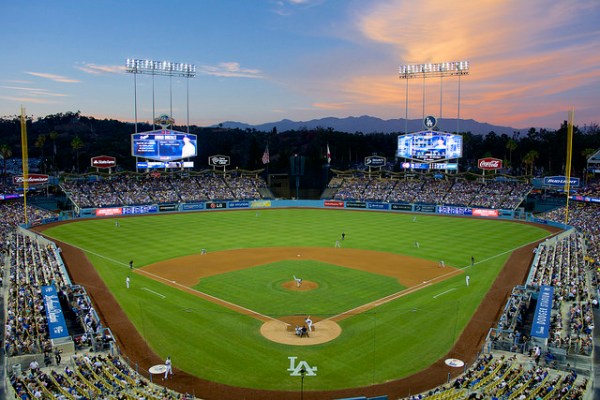
Dodger Stadium Evening

If you’re expecting the type of researched pieces of import that you’ve seen the last few days (well, researched enough for a blog), you best turn around now. I’m writing as I travel on Interstate 70 heading to Washington, D.C. for the Friday night Pirates-Nationals game.

Don’t worry, my dad is driving. I have not yet mastered the ability to type on a laptop and drive on the interstate at the same time. Surface streets? Sure. Not the interstate.

Nationals Park will be Major League Ballpark number 15 that I have visited. So in terms of visiting every park, I’m halfway there/living on a prayer. At some point I will craft a ranking of the 15 stadiums that are unfortunate enough to have had me as a guest, along with tips for fans looking to visit, but that will be another day when I have steady Internet access.

There are elements of a good ballpark to my eyes. It should (among other elements) feel intimate without needing to know if the guy two rows down put on deodorant this morning, have quality food options that reflect the area, feel connected to the neighborhood around it, support an exciting atmosphere in the crowd, and if possible, have a nice view.

Citizens Bank ParkI won’t give away too much of what I like and dislike from the park’s I have visited. That would ruin the forthcoming rankings! But I will say that being unique scores points with me. Citizens Bank Park is well-constructed, has ample room in the concourse, tasty food and fosters a fun atmosphere for baseball. But the red-brick-and-steel design and placement in the middle of a parking lot that should have its own zip code restrict any feelings of originality or connection to Philadelphia as a city. I’m sure it’s an improvement on Veterans Stadium, but it won’t be in my top class.

I don’t much care about a stadium’s capacity being too big or too small, but it needs to be well-designed to its capacity. Dodger Stadium represents a brilliant way to hold 56,000 fans. Three decks plus a smaller “top deck” that doesn’t extend too far around, plus outfield sections that don’t extend too high. Chase Field feels more cavernous, even though it has fewer seats. Good design can mask a park being “too big.”

Finally, it helps to be nice. One of the reasons families return to Disney parks and resorts year after year is the company’s devotion to customer service. People visiting the park are not “customers,” they are “guests,” and they are treated as such. Some teams should take this to heart. The ushers have to maintain order and the cashiers are probably making minimum wage, but you are in the guest service business. There is no reason that you can’t treat your fans as well as Disney treats its guests. Trust me, it pays off.

All right, well it is time to do a little D.C. sightseeing before I get a taste of Nationals Park. Maybe it will find its way toward the top of the list.

Effectively Wild, Pocket, Jonah Keri: “Things I Like” Thursday

Oprah had her favorite things. Mine are objectively better.

The meaning of “Like” has been unfortunately co-opted by Facebook and Instagram. Now we like everything, including a high school acquaintance writing that her grandpa passed away. We must re-capture “Like.”

So every other Thursday, I will recommend three things that I like and think you should check out as well. I’ll steer clear of recommendations like, “Hey, have you heard about this Guardians of the Galaxy movie?” or “I’ve been trying out this service called Uber…” Both make more money than Satan’s rich father (a noted Wall Street executive), so they don’t need my help.

The goal is (A) to refer you to media items of quality, which is always a good idea, and (B) encourage an environment in which more people advocate for what they enjoy. The recent layoffs of writers from The Score and Sports on Earth remind me that just because something is well-done doesn’t mean it is garnering an audience. Let’s spend a little less time railing about what we hate and a little more time sharing what we love. It’s the only way a meritocracy will work.

On to the things I like, Part 1!

Effectively Wild: The Daily Baseball Prospectus Podcast (LINK)

Effectively Wild PodcastGod bless the no-doubt-sleep-deprived hosts of Effectively Wild, Ben Lindbergh and Sam Miller. They not only turn out 35-minute podcasts (give or take) every weekday, they both produce some of the best baseball writing on the web and run a stellar website at Baseball Prospectus (Lindbergh is the former editor-in-chief, Miller is the current one).

Problem is, much of Miller’s great content is behind the BP paywall. The site’s pieces are well worth the $40 per year subscription, but I understand if you can’t put the money together for it. Lindbergh is now at Grantland full-time (though he stole $800 from me), so all his stuff is free. And I’m thankful the podcast is continuing after his departure from the site.

As a daily podcast, Effectively Wild functions as a discussion of the headline stories and trends in baseball that smart fans should care about. The two come at the stories from a mostly analytical perspective, but they are also journalists who know a lot about MLB’s inner workings. I learn new things about the game every time I listen. Their recent podcast on “How to Hire a GM” was particularly insightful.

Listening to the show is like having two dry, intelligent friends who have great baseball discussions every day. Check out the RSS feed or iTunes listing, and I’m sure you will find a topic that piques your interest.

Pocket (LINK)

Pocket App LogoIf you’re like me, change your life and habits immediately you spend a lot of time on Twitter. I follow many great writers, one of whom is mentioned in the following section, and I need a way to organize all of the pieces of theirs I want to read.

Enter Pocket. There are several good article-bookmarking apps out there; maybe you’ve heard of Instapaper. But I like Pocket best, plus it is free. There are apps for iOS and Android devices, Chrome and Mac plus GetPocket.com. LifeHacker has detailed the features further.

Mostly, I save links using Tweetbot (Pocket service is integrated to the app) and the Chrome extension, Then I use the iPhone app or website to read the stories that I have bookmarked. My reading list is always packed with content, and I feel as though I am reading more quality pieces than ever before.

The killer feature: offline saving, to read articles on airplanes and subway trains. Beautiful.

Jonah Keri (LINK)

Jonah Keri Extra 2%My only problem with using Pocket is that I have hundreds of saved articles, many probably fantastic, that I will just never get to reading. There are too many good writers and too much good writing out there that even I, an unemployed insomniac, can’t consume it all.

Still, I try to make time for pieces from a few choice writers. One of these is Jonah Keri. If you’re unfamiliar, Keri writes standout baseball stories for Grantland, including the unmatched series The 30 examining particularly interesting aspects of a few MLB teams each week. His background as a financial journalist shows in his firm grasp of baseball numbers and analytics, but his writing style teems with a love for the game and sharp Canadian sense of humor.

Keri also authored the indispensable Baseball Between the Numbers as well as The Extra 2% about the Tampa Bay Rays. The latter is my favorite baseball book of the last five years, a must-read for newbies wondering how all these fancy baseball stats can possibly lead to winning ballgames. Up next, his new Montreal Expos book Up, Up, and Away (along with your kiss) is on my list.

If you can’t commit to reading one of his books, I recommend his Grand Theft Baseball piece, an award-winner for good reason. Keri is the baseball writer I want to be.

2024 U.S. Olympic Bid Cities: A Ranking

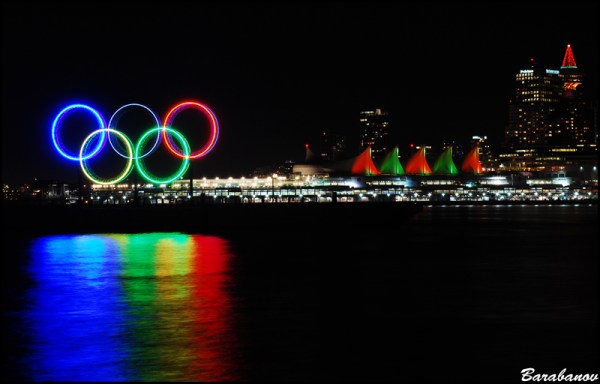
Olympic Rings

Two years from today, we will be right in the middle of the Olympics in Rio de Janeiro. While the next 24 months will be pocked by stories of construction behind schedule and the exorbitant costs of the darn thing (rightfully so), we’ll brush the controversies aside come August 2016 and enjoy the Games.

The London Olympics were the most-watched television event in American history, and Rio 2016 is going to blow those ratings out of the Thames. Rio is only one hour ahead of the U.S. East Coast, the scenes of Sugarloaf Mountain and Copacabana will be positively gorgeous and NBC will put the names Katie Ledecky, Simone Biles and Mary Cain into the America’s Sweetheart hype machine and make them national conversation pieces.

No matter how it comes about, Americans love the Olympics. We shake our heads at the cost and the needlessness, but then we inevitably watch. Soon enough, the Games will be back in the States, because International Olympic Committee (IOC) members know we love it and will pump even more ridiculous millions in ticket revenue, sponsorships and plushy mascots than the Brazilians will.

Getting the Games

Quick synopsis of how your city gets to host the Olympics:

  1. Your National Olympic Committee must decide that it wants to be in the race at all. The USOC has not bid for the Winter Olympics since Salt Lake City hosted in 2002, and it abstained from the 2020 Summer Olympics race (Tokyo will host in 2020.)
  2. Your city must beat other cities from your nation to be the bid city. We are in the midst of this “race” now. Many American cities expressed interest in bidding for the 2024 Games, but the USOC has narrowed the field to four finalists and will likely pick one by the end of 2014. More on those in a moment.
  3. Your bid must campaign and earn more votes from the IOC than the bids from other international cities. Tokyo beat out Istanbul and Madrid to host the 2020 Olympics. For 2024, people in the know expect Istanbul, Paris, Rome, Doha and Cape Town (or another South African city) to be among the challengers. The votes will be cast in 2017.

The four finalists for the American bid are: Boston, Los Angeles, San Francisco and Washington, D.C.

Now, I was able to write most of that paragraph from memory because I have spent years reading about the Olympic bidding process and the millions of dollars city boosters spend just to be considered as a host for the Games. It’s amazing how much free time you have if you can’t get dates.

Even if you’re a person who does have a social life, you may recall that the last American Olympic bid came from Chicago for the 2016 Games. Chicago’s bid was, to my eyes, a fantastic proposal. It was pretty: Beautiful images of events on Lake Michigan with a skyline view dotted the bid book. It was technically sound: a compact area of venues that included 11 sports under one roof. It was relatively economical: about $4.3 billion and over 90% privately-funded.

Chicago Olympics

Chicago’s Olympic plans were absolutely gorgeous — but they lost.

It finished last. Chicago got the fewest votes of the final four candidates in a shocking vote. How? Pick a reason. The IOC and USOC were in a dispute over revenue shares. IOC members were more dazzled by the possibilities of the first South American Games and didn’t see Chicago as an alpha international city. They didn’t like the Blues Brothers. Who’s to say?

No matter the reason, we can draw a lesson from the 2016 debacle: the American candidate must compete with the beauty of Paris and Rome, outshine the allure of the first African Olympics and provide a desirable alternative to the billions Qatar is willing to spend on drop-thousands-of-migrant-workers-dead-gorgeous stadiums.

To a lesser extent, the bid city must demonstrate ability in the IOC’s “technical categories” like: Hotels and accommodations, sound finance, city infrastructure, government and public support, Olympic Village and sports venue plans, security, transport and what the IOC calls “legacy.”

But really, these are secondary. Rio scored 5th in these technical rankings during the 2016 bidding and still won. If you’ve been paying attention, you noticed there were only four finalists for 2016. Rio, the eventual Olympic host, got a worse score than Doha, which was eliminated by the IOC before the finals. Don’t try to understand the IOC. Just impress them.

Let’s go to my rankings.

4. Washington, D.C.

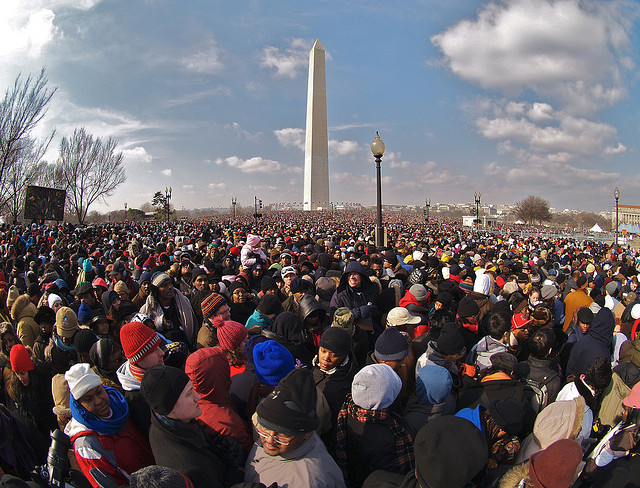
National Mall

We know one thing: D.C. can handle huge crowds. (Alexander Torrenegra/Creative Commons)

My first thought on a DC Olympics: where the hell are all the venues going to be?

Within the district, you have RFK Stadium (plans would demolish it and build the Olympic Stadium on the site), Nationals Park, Verizon Center and the gyms for George Washington and American University. You can do some neat stuff like beach volleyball on the National Mall, but you’ve still got dozens of other sports to house with nowhere close to go. Think President Clinton will make room for archery on the White House lawn?

D.C.’s proposal for the 2012 American candidacy (it lost to New York City) put several sports in Baltimore, 35 miles away. Sounds feasible enough, but consider that Chicago’s Olympic plan put 85% of the sports venues within 12 miles of the city center. The IOC prefers a compact venue plan for athletes and fans, and if you’re including far-flung venues, you should have a better reason than “Baltimore has more room for a basketball arena.”

Look, any of the four finalist cities would put together a fantastic Olympics. They all have thousands of hotel rooms, world-class infrastructure and transportation systems, sports venues that other nations would envy and enough corporate support to stave off taxpayer subsidies of the Games.

But of the four finalists, a “Washington-Baltimore Olympics” sounds the least romantic. This bid would mostly serve as fodder for bad jokes like my “archery on the White House lawn” bit, and I don’t see the IOC falling in love with D.C. after seeing their Games in London, Rio and Tokyo.

Maybe some Congressmen will volunteer so they can block javelins as well as they block legislation. << (great joke)

3. Boston

Fenway Park

Even if baseball doesn’t return to the Olympic program, you’d see Fenway Park involved in a Boston Games. (Chrissy R/Creative Commons)

There’s a lot to like in a Boston bid. It is a beautiful city in the summertime, with plenty of waterfront and historical sites to emphasize in a pitch for the Olympics. The temperatures would be milder than Atlanta’s, the local colleges and universities provide several venues and thousands of bed spaces, and boy, doesn’t the idea of the Olympics in Boston just sound nice?

The international sports community already knows Boston through the Marathon, and that can be their conduit to letting the IOC know “hey, we’re a great sports city for more than just a 26-mile run.” And it is a great sports city that I feel would get ample support for an Olympic bid, even if concern trolls may point to the bombings and drop terms like “security issues.”

All in all, it is hard to find too many flaws in a Boston bid. You need a spot for the Olympic Stadium (it could be temporary, as Chicago planned) and maybe some upgrades to public transit, but I give the city a fighter’s chance against San Francisco and Los Angeles for the U.S. candidature. If I have a qualm, it would be that Boston doesn’t carry the same international prestige or recognition as Rome, Paris or Istanbul. That may be difficult to overcome in front of the IOC.

2. Los Angeles

U.S. Olympic team 1984

The 1984 Los Angeles Games were an unmitigated success.

If you’re someone who hates the idea of the United States hosting the Olympics, this is the bid to support.

You say, “new stadiums are unnecessary and will just become white elephants.” Los Angeles already has all the venues it needs within L.A. County.

You say, “I don’t want my taxes paying for a two-week party.” A Los Angeles Olympics would use no taxpayer money.

You say, if you’re an Angeleno, “the traffic will be a mess.” This is a particularly L.A. kind of concern, but one that never materialized when Los Angeles hosted the 1984 Olympics. Some say the freeways were never more open.

L.A.’s successful hosting efforts in 1984 both count as the bid’s biggest strength and its biggest weakness.

On one hand: the 1984 Games turned a $232.5 million profit, and a $93 million surplus created a youth sports endowment that continues to grow. It proved that L.A. can host a fantastic Olympics that will be loved by both sports fans and fiscal responsibility fans. In the late ’70s, much of the world felt the Games were expensive, unsafe boondoggles (sound familiar?), and many say Los Angeles “saved” the Olympics.

On the other: the idea of another Los Angeles Olympics may strike a “been there, done that” chord with the IOC. Even a 40-year gap between Games may not be enough for the elder contingency of the IOC. Only Paris has gone less than 52 years between hosting stints. Only London has hosted three times. These should be thought of more as exceptions than as proof it can be done.

A new indoor NFL stadium, Staples Center, Galen Center, Frank Gehry-designed concert hall, revitalized riverfront, rail system, soccer stadium and other venues are all post-1984 creations. But we can easily imagine the IOC looking at an Olympics centered around the Los Angeles Memorial Coliseum and thinking, “haven’t I seen this before?”

1. San Francisco

San Francisco America's Cup

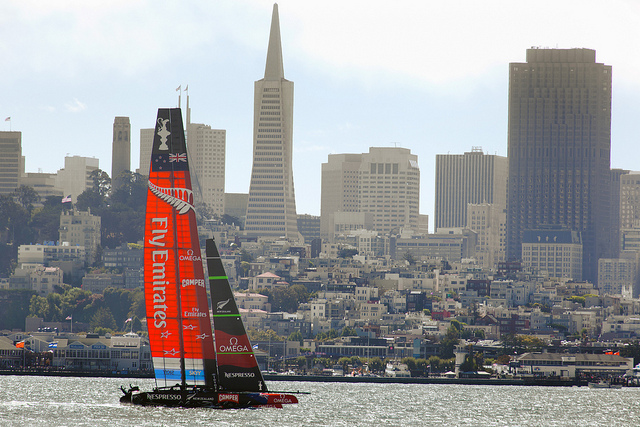
San Francisco showed off its beauty to the sports world during the America’s Cup. (Robert Couse-Baker/Creative Commons)

Let me paint you a picture. Not an actual one. A word picture.

The Opening Ceremonies in a new stadium at Candlestick Point, sailing on San Francisco Bay as in last year’s America’s Cup, marathoners and cyclists crossing the Golden Gate Bridge on a foggy morning, an American gymnastics gold medal in a new waterfront arena for the Warriors, equestrian through Golden Gate Park, whatever use they can find for beautiful AT&T Park…

Sorry, I think I drooled on my keyboard a little bit.

It sounds breathtaking. It would be breathtaking.

Okay, but what about the technical aspects? San Francisco proper is too packed for more sports arenas (they’d have to build out onto the water for the Warriors). Luckily, Oakland and Berkeley are a lot closer than Baltimore is to Washington.

Traffic is an absolute concern, but this is a rail-heavy area that could be even more accessible if the California high-speed-rail plan can ever leave the station. The Bay Area has a smaller population than the L.A. or D.C. regions, but the corporate money would be almost unmatched.

Here’s the issue: San Franciscans. Of the four cities, I think you’ll get the least public support from denizens of the Bay. And they’re not wrong! The Olympics can be costly and a headache, and if you’re already happy with San Francisco the way it is, no wonder you don’t want five rings coming to town. I don’t think a Bay Area Olympics would be particularly bad on the citizenry, but NIMBYs gonna NIMBY.

But San Francisco can win on an international stage. Their bid team will present the same images I did above, just with a million-dollar communications team and fancy renderings. If you need a city that can win a beauty contest with Paris, Rome and Cape Town, SF can do it.

It may be selfish, but I want to see the Olympics in the United States. I was only four years old when Atlanta hosted, so I have no memories of it, only a dusty purple hat. I know the U.S. can host a wonderful Games, and I’d like to see it happen.


Knowing Advanced Metrics: The Four Kinds of Player Stats

Billy Heywood Little Big League

All stats are not equal. Some of the more ignorant opponents of the sabermetrics or fancy-stats revolutions tend to characterize advanced stats like the obscure numbers Twins broadcaster Wally Holland pulls out in the movie Little Big League: “Lou, by the way, has hit .416 lifetime versus Hanley in the month of September in even years, so that certainly bodes well for this at-bat!”

That’s a stat, sure. But it doesn’t bode well for the at-bat, nor is it useful whatsoever beyond illustrating that variance is cuh-raaaaazy.

Proper understanding of sports statistics and analytics means understanding that there are different categories of stats, and media members often mislead you if you’re not paying attention.

So what are these categories? In Day 2 of the 365-day BlogForAYear project, I try to parse it out.

1. Trivia

Think about Little Big League or kind of weird player facts you see on baseball video boards. Real example from last night at PNC Park: “Travis Snider has gone 8-for-21 (.381) with two home runs in his 10 games played on Mondays this season.” That stat is obviously trivial; you will never see Pirates manager Clint Hurdle explain his lineup card for next Monday’s game by saying, “Well we trust Snider to put up great numbers on Mondays. The guy never gets bummed out that the weekend is over.”

When it’s useful:

It is fine to toss out notes of trivia, especially during television and radio broadcasts of games. Sports are entertainment. They are many other things, but they are entertainment, and finding little nuggets within the numbers adds to the fun of it. Jayson Stark traffics in the strange-but-awesome stats that pop up in baseball, and it’s a very fun way to look at the game.

When it’s harmful:

Evgeni Nabokov Islanders

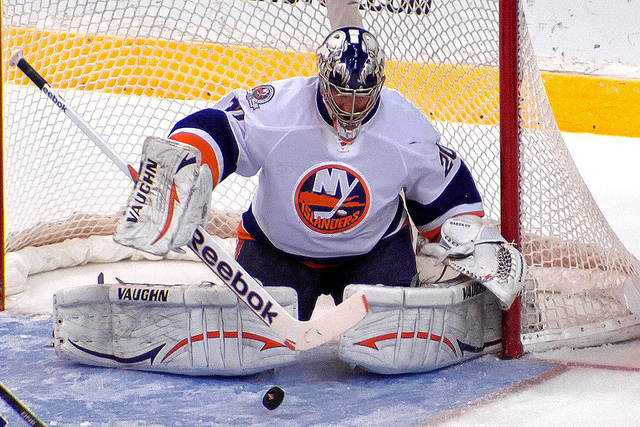
Evgeni Nabokov, author of “Lolita.” (clydeorama/Creative Commons)

TV broadcasts very often present trivia stats as if they were evaluative or trend indicators. For example, you might hear during an NHL game this season: “Evgeni Nabokov has great career numbers against Columbus: 20-5-3, .932 save percentage, 1.79 goals against average, better than he has against any other team. He really seems to have the Blue Jackets’ number, doesn’t he?”

(Note: Fake example in that I’ve never heard this said, but the numbers are real.)

The issue here is not one of small sample size per se. That’s 29 games of NHL action to contend with, and lord knows we draw judgments on goalies around Christmas when they are about 29 starts into their season.

Instead, consider the context of the sample: most of these games come from (A) when Nabokov was a better goalie and a Vezina candidate, (B) when the Columbus Blue Jackets were largely locked in the Western Conference basement with no sunlight and everyone put up good numbers against them, and most importantly (C) when the Blue Jackets players and Nabokov’s teammates were completely different individuals than we see today.

These are the trouble spots: the stats that sound like they are indicative of what we will see in tonight’s Lightning-Jackets game, but are really just frivolous or nothing more than “a neat little fact.” Now, I’m not opposed to frivolity; I have more than 52,000 tweets. But fans, and especially sports gamblers, must be wary of broadcasters presenting trivia that could be interpreted as a more substantive stat.

2. Story Stats

These are the box score stats. They show up in the newspaper or the online game recap to tell you how the game was won.

“[Geno] Smith, responsible for 11 turnovers over the first four games, played mistake-free and threw three touchdown passes while completing 16-of-20 passes for 199 yards in the first road victory of his young career.” — Jets-Falcons recap from Monday, Oct. 7

When it’s useful:

There is absolutely a story in that game recap. Geno Smith put up poor stats in the previous games but played better to lead the Jets to victory. Beautiful! Perfect for a game recap. As long as you realize the stats represent “this is how Geno Smith led the Jets to a win” and not “this is why Geno Smith is a good quarterback who is turning things around,” you’re doing it right.

Scoring two goals in a game, going 8-for-13 in a series with 6 RBI, averaging 28 points per game during this postseason… all examples of stats that tell the story of a player having success and being a part of his team’s wins. The numbers construct their own little narrative, and that’s useful.

How did the Lakers win last night? “Oh, Nick Young just went off. 41 points, 14-of-23 from the field, 6-for-11 from beyond the arc. He was insane!” Cool, got it.

Robots aren’t taking your job, sports recap writers, but they’ll try. Robots never sleep.

When it’s harmful:

It only took me until Day 2 of 365 for me to use the xkcd comic.

xkcd all sports commentary

The problem comes in the post-game shows and the newspaper columns — TV analysts and writers take a one-game performance or stat line and use it to judge a player.

Worst of these are the narratives of “clutch,” and these seem to pop up in every sport. Make a couple late mid-range buckets? Clutch shooter! A pair of game-winning singles? Clutch hitter! Lead a few 4th-quarter comebacks? Clutch quarterback! We as a nation had an honest-to-God national conversation about Tim Tebow because of the flimsy narrative device of “clutch.” Derek Jeter’s brand is built on being “Captain Clutch.” It’s why he has this list of gorgeous ladies notched into his bedpost and you do not.

For years, the line in baseball was that there is no such thing as clutch. Nate Silver wrote in 2008 that “clutch hitting ability exists,” but admits the data proving it may be better defined as “smart situational hitting” than some sort of mental strength. I haven’t looked too far into the arguments in other sports, but there’s a reason NBA savant Zach Lowe writes about “clutch” in quotation marks.

Yet there is a reason that “clutch” and other story-stats-as-narrative-tools propagate.

“There is a strain of journalism as hero worship, a strain that asks us to believe that sports are tests of character, that those who come through at key moments of the game have reached down deep inside themselves and found the strength and courage to succeed. I don’t want to get into that.” — Bill James, The Hardball Times Annual 2008

The upshot of James’ look at whether a clutch hitter exists or not? “We don’t know.” You should use the same kind of skepticism when a media member presents a story stat as a referendum on a player’s ability in crunch time.

3. Evaluative Stats

When they’re analyzed the right way, advanced metrics can be proper evaluations of a player’s skill level. In the absence of a scouting report, these numbers can indicate that a player is great, above-average, average, below-average or poor. This is analytics.

When it’s useful:

I have this photo from a Nate Silver lecture saved in my phone. It comes from his must-read book The Signal and the Noise.

Nate Silver What Makes Data Rich

Break it down. Advanced metrics are strong evaluation tools when they have quantity. The concept of “puck luck” in hockey stems from the idea that a player scoring a goal (or being denied one) is defined largely by unexpected bounces and turns of the puck. It’s not all about skill.

The effects of puck luck can be smoothed out with a large enough sample. Take Jarome Iginla’s stats from this five-year sample.

Year 		Goals/Game	Points/Game
05-06		.43		 .82
06-07		.56		1.34
07-08		.61		1.20
08-09		.43		1.09
09-10		.43		 .92

Iginla’s true talent in that five-year period is not .82 points per game and it’s not .61 points per game. But when you pull it all together, you have a player you can expect to score about 1.05 points and .48 goals per game. And wouldn’t you know it, in the 2010-11 season, Iginla averaged 1.05 points and .52 goals per game. Take a large sample and your data almost always becomes more reliable.

For quality and variety, you want to make sure the player’s stats are being put up:

  • against both good and bad opponents (strength of schedule metrics are quite common these days)
  • in offensive-friendly and defensive-friendly venues (this mostly applies to baseball and football)
  • with different groups of teammates if possible (especially in basketball, hockey and soccer, where the ball and puck flow through many players).

Helpfully, you don’t need a degree in applied mathematics to synthesize all these factors. Guys and gals who do possess such degrees have dumped the numbers into a science machine to spit out a wonderful invention: projections!

I include projections in evaluative stats category because they are based entirely on the evaluative stats and factors mentioned above. Biff the Sabermetrician doesn’t have a Grays Sports Almanac; all he has is a database of what has happened in the past and some algorithms.

The NFL has KUBIAK projections. MLB has PECOTA and ZiPS and a bunch of others. The NHL has VUKOTA. The NBA has SCHOENE, the folks on Twitter tell me. They aren’t just for forecasts; use these projections as part of your evaluation of a player.

When it’s harmful:

Never! Advanced metrics are the best!

Well, mostly, players don’t want to hear about it. They don’t really care about their WAR or their Corsi or their DVOA. And in most cases, they don’t need to care. The players themselves are inadvertent data collectors in most cases. Yasiel Puig’s job is to hit the ball hard, not to worry about his BABIP. But his general manager should care very much about BABIP and all the other metrics when considering the value of a contract extension.

If you’re a baseball fan, you don’t need to understand or even subscribe to sabermetrics. You can totally enjoy the game without it, and people have been doing so for a century. It’s fine! But fans need to understand that general managers and baseball operations staff do subscribe and use advanced metrics to make decisions. If you want to criticize their moves, start reading up the evaluative stats or I will chastise you on Twitter. And I’m very good at it. That shirt looks stupid on you.

4. Trends

This last group of stats doesn’t fit too neatly into any of the other three categories. Anyone who has ever played pickup basketball knows the feeling of being “in the zone” like you can’t miss, or on the other side, feeling totally out of sorts. Therefore: trends!

When it’s useful:

A goalie maintaining a 140-minute shutout streak is kind of trivia and kind of a story, but it also indicates that he could be in a groove of goaltending, however much you want to put stock into how long the streak is likely to continue.

Pedro Alvarez Creative Commons

Pedro Alvarez presents an example of trends being useful. (Keith Allison/Creative Commons)

An opposite baseball example: third baseman Pedro Alvarez has committed 23 throwing errors this season (or one throwing error every four games), and no sane person watching his throws would regress those numbers or draw on a larger sample size and expect those error numbers to go down. He simply looks like a player who can’t make a throw from third base.

Just as we recognize slumps, we can see when a player looks better than he usually does. We now theorize that the “hot hand” in basketball really does exist, per a study by three Harvard graduates. When the smarties controlled for the increasingly difficult shots taken by the “hot hand” player (you can read why in the study), a hot shooter feels “from 1.2 to 2.4 percentage points in increased likelihood of making a shot.”

It’s not much, but it’s not nothing.

When it’s harmful:

During my first draft of this post, I included only three kinds of player stats but eventually felt trends were just barely worthy enough to get their own category.

However, we must be careful not to overrate the effects of a hot hand or a hot bat. The Thunder wouldn’t give the last shot to Jeremy Lamb over Kevin Durant just because Lamb made his three previous shots. A hot hand is not an unstoppable hand.

That fact doesn’t stop writers and broadcasters from using too many small-sample-size stats to draw large conclusions. Always be on the lookout for numbers that have arbitrary endpoints like “in the last 63 games” or “since May 5.” Chances are the media member is cutting off at the perfect spot on a game log in order to make his or her point. Those aren’t trends, they’re cherry-picking.

A final note on trends: they are usually not as good a signal of future performance as projections are. Mitchel Lichtman studied the reliability of season stats compared to projections, and found that using projections can fight our recency bias. “Until we get into the last month or two of the season, season-to-date stats provide virtually no useful information once we have a credible projection for a player.”

Billy Butler’s having a rough year? He’ll probably come back from it. Nelson Cruz is hitting over his head? He’ll probably come back down to earth. You don’t know much about advanced metrics? Keep reading my blog, I’ll try to help.